If you buy through retail links on Ember & Edge, we may earn an affiliate commission at no additional cost to you. How affiliate partnerships support our site
Bringing a laser cutter into a woodworking shop changes how you prototype, join, and decorate timber. Whether you are cutting intricate fretwork, slicing birch plywood for architectural models, or branding solid hardwood boxes, choosing the right machine comes down to understanding the physics of diode lasers, beam focal spots, and usable bed geometry.
Because marketplace descriptions often mix power ratings, operational speeds, and bundle configurations, cutting through the marketing claims is essential. In this guide, we break down what optical power actually delivers in wood, examine key trade-offs between compact etchers and high-output cutting frames, and evaluate desktop models available across varying power classes.
A machine advertised with a "20W" or "10W" label typically refers to its continuous optical laser output, whereas older or ambiguous listings sometimes state total electrical wall draw (such as 40W to 90W) while outputting only a fraction of that optical beam energy. When evaluating a laser specifically for cutting through wood rather than surface marking, always verify the manufacturer's stated optical output wattage.
What to Look for in a Wood Laser Cutter
Wood is an organic, non-homogeneous material. Grain direction, moisture content, natural resins, and the interior glues found in plywood all influence how effectively a laser beam vaporizes the fibers. When selecting a machine, consider four primary factors:
- Optical Output (Wattage): Low-power modules (under 5W) excel at sharp surface engraving and raster artwork, but struggle to slice through timber cleanly. Modules between 10W and 20W combine multiple diode beams into a single tight spot, providing enough energy density to cut through 3 mm to 6 mm craft plywood in fewer passes without excessive charring.
- Working Area: Standard desktop open-frame units generally offer around 400 mm × 400 mm (roughly 15.7 × 15.7 inches), which comfortably fits standard quarter-sheet craft boards. Compact models (around 150 mm × 150 mm) take up minimal desk space but limit you to smaller decorative items like coasters, jewelry, and luggage tags.
- Control and Software Compatibility: Open-source firmware compatible with industry-standard control packages like LightBurn and LaserGRBL gives you granular control over travel speed, pass count, kerf offset, and air-assist triggers. Standalone touchscreens and Wi-Fi connectivity offer the convenience of untethered operation, though file management on your computer remains the standard workflow for precision cut jobs.
- Air Assist and Smoke Evacuation: Cutting wood generates combustible soot, smoke, and sticky resin droplets. Directing a focused stream of compressed air directly at the cutting kerf blows out embers, clears charred debris, and keeps smoke from degrading the protective glass lens of the laser module.
Laser Power Classes: Matching Wattage to Woodworking Tasks
| Power Class | Optimal Wood Tasks | Key Limitations | Primary Consideration |
|---|---|---|---|
| 2W – 3.5W (Ultra-Light) | Surface engraving, logo etching, very thin veneers or balsa (≤ 1.5 mm). | Cannot reliably cut structural plywood; multiple passes lead to wide, charred kerfs. | Compact footprints, budget-friendly entry for marking finished wooden gifts. |
| 5W – 7W (Light / Mid) | Detailed photo rastering on hardwoods; occasional through-cuts in 2–3 mm basswood. | Slower cutting feeds; multi-pass work required for common 3 mm ply. | Fine focal spots yield crisp graphic details on lighter timbers. |
| 10W – 12W (Balanced) | Regular cutting of 3–5 mm craft plywood, basswood sheets, and thin hardwoods. | Requires careful speed calibration to avoid scorching dense plywood glue lines. | The sweet spot for maker workshops balancing cutting speed with fine line engraving. |
| 20W+ (Heavy Cutting) | Fast single-pass cutting of 4–6 mm plywood; cutting thicker boards up to 8–10 mm under proper air assist. | Slightly larger optical spot size can produce slightly broader raster engraving lines. | Maximized throughput for batch crafting, boxes, layered wall art, and puzzles. |
High-Power Cutting Systems (10W – 20W)
For makers prioritizing sheet cutting, box building, and architectural fabrication, 10W and 20W diode heads deliver sufficient energy density to minimize pass counts. Reduced passes mean cleaner cut faces, less internal glue charring, and substantially shorter job runtimes.
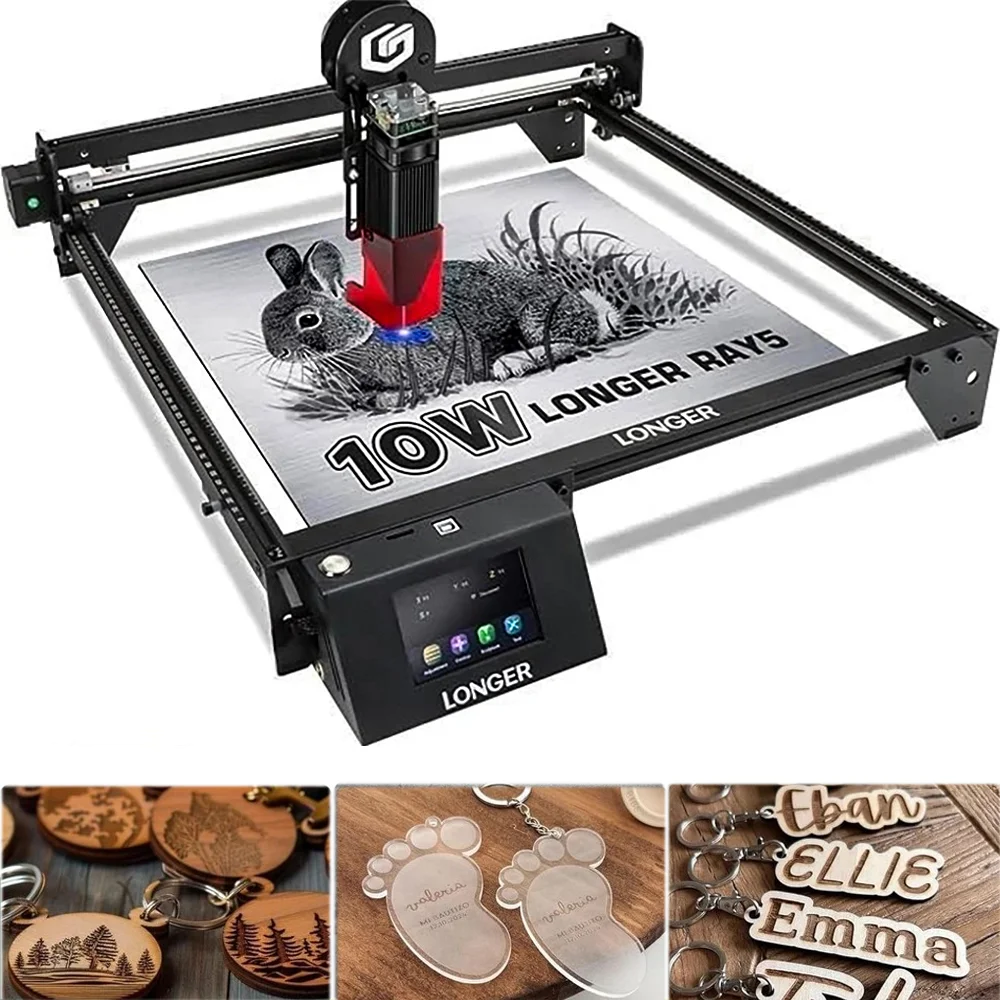
The LONGER 10W model offers a full 400 mm × 400 mm bed area, Wi-Fi connectivity, and an integrated touchscreen interface. With support for both LaserGRBL and LightBurn, it provides a stable open-frame platform for common sheet stock like 3 mm basswood and birch plywood. If you choose this model, check with the seller whether the package includes an air-assist nozzle and tubing, as adding active air flow significantly improves edge cleanliness during cuts.
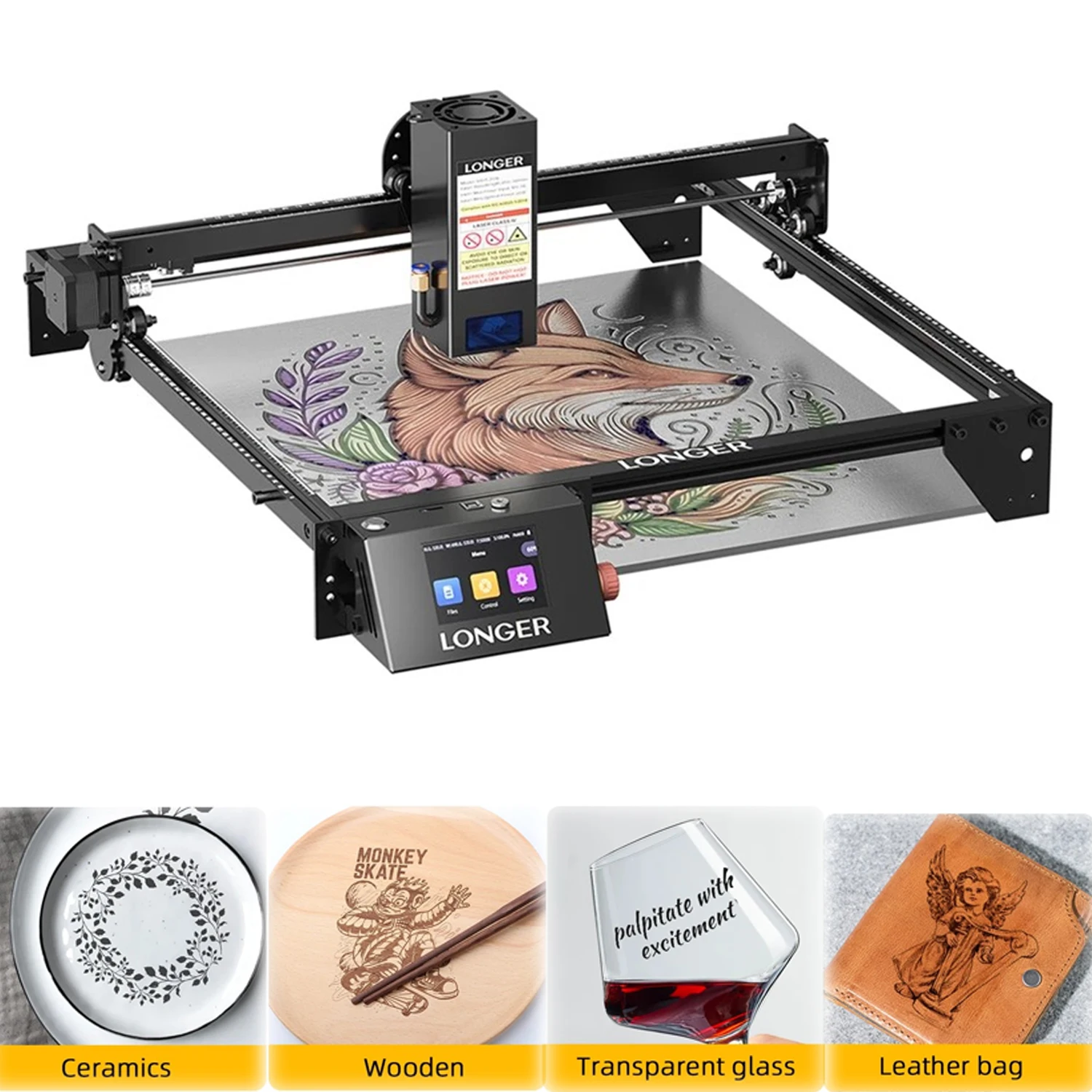
Stepping up to a stated 20W module, this LONGER unit utilizes a 400 mm × 365 mm envelope. The combined diode power allows faster linear feed rates when slicing through thicker stock, reducing thermal heat buildup along the cut edge. Like its 10W counterpart, it includes touchscreen and Wi-Fi features for convenient shop operation.

The Atomstack A20 Pro V2 features a multi-diode beam combining system (advertised as quad-laser) within a 400 mm × 365 mm frame. High-output units in this category produce substantial smoke volumes when chewing through timber, making an external exhaust vent or enclosure an essential shop companion.

When working with large signage, architectural panels, or nesting dozens of parts across a single sheet, working bed dimensions become the limiting factor. The Twotrees TTS-20 Max provides an expansive 600 mm × 600 mm working area paired with a stated 20W head. Keep in mind that larger frames occupy considerable bench space and demand a rigid, flat work table to prevent gantry deflection across the extended axis spans.
Mid-Range & Versatile Multi-Power Options (5W – 12W)
If your projects blend photographic raster engraving on hardwood lids with occasional light cutout work, 5W to 12W units often provide an ideal balance between spot size and cutting capability.
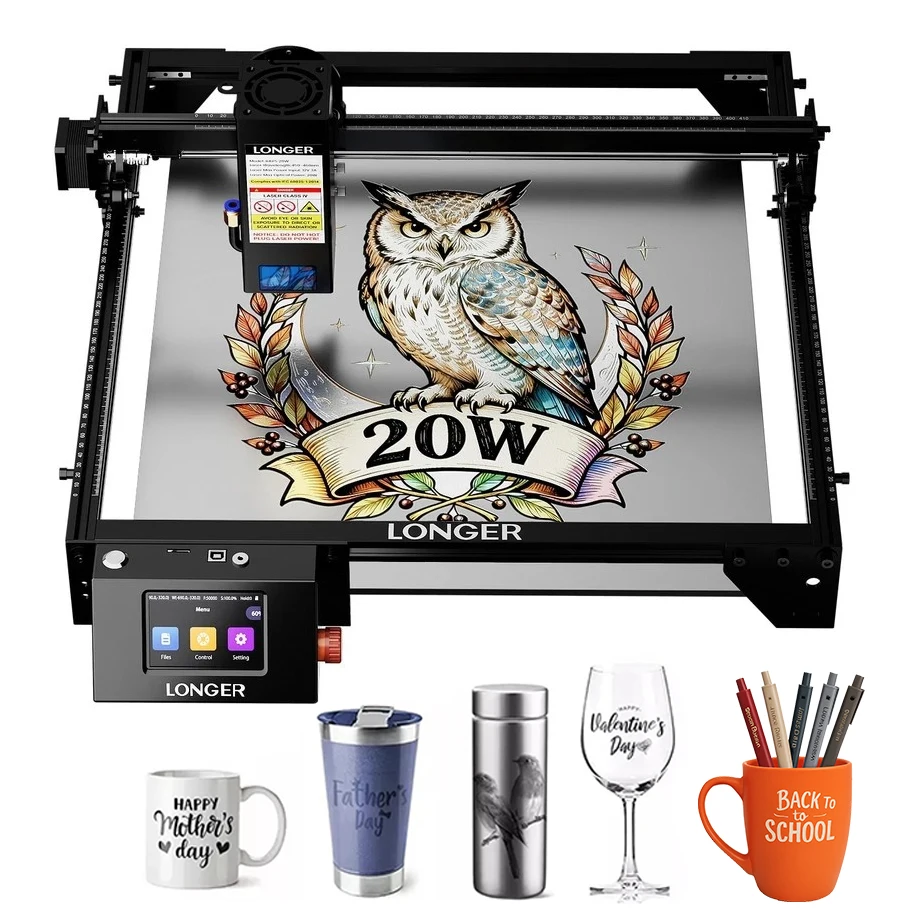
The LONGER multi-variant listing spans 5W, 10W, and 20W options across a standard 400 mm × 400 mm platform. Because multiple wattage selections exist under the same title, buyers must ensure they select the optical power level that aligns with their specific cutting thickness requirements before completing checkout.
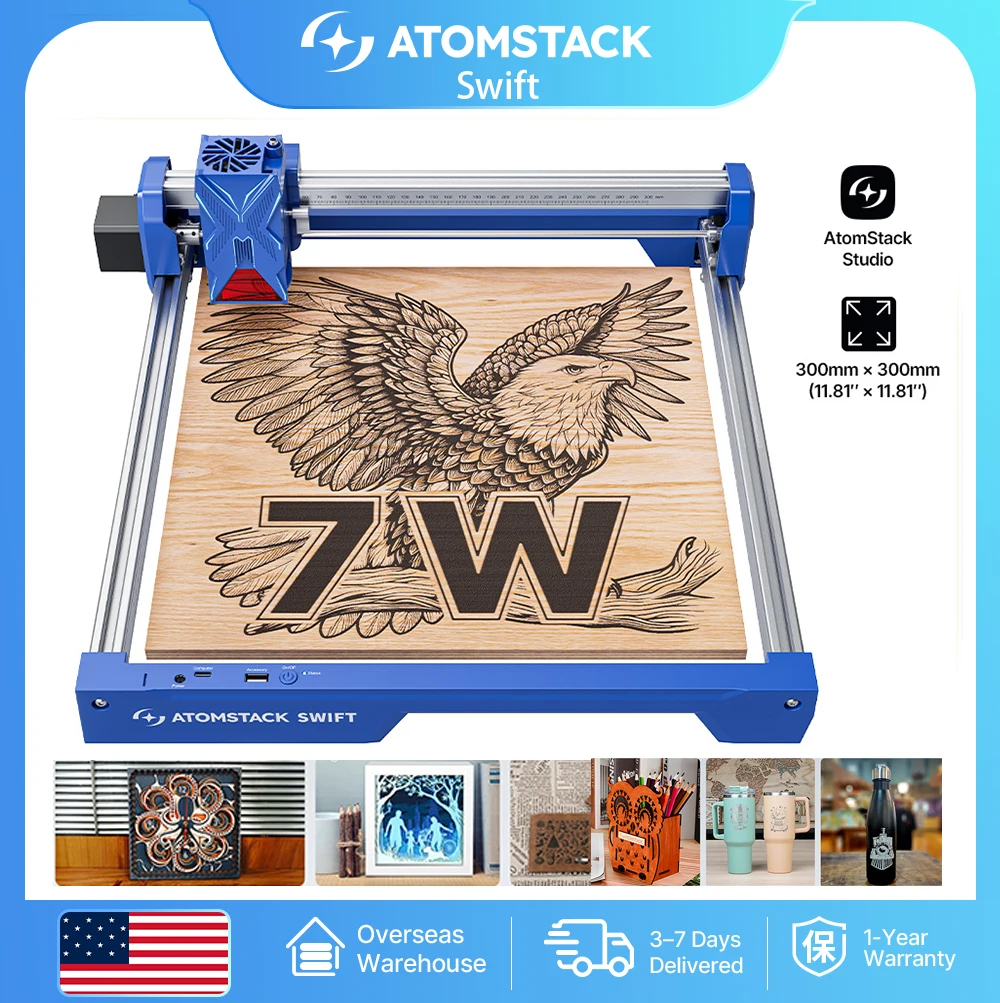
The ATOMSTACK Swift series offers selectable power modules (stated as 7W or 12W) built on a portable desktop frame. Its blue-diode design targets hobbyists needing manageable tabletop footprints for custom gift making, decorative box covers, and lightweight craft assemblies.
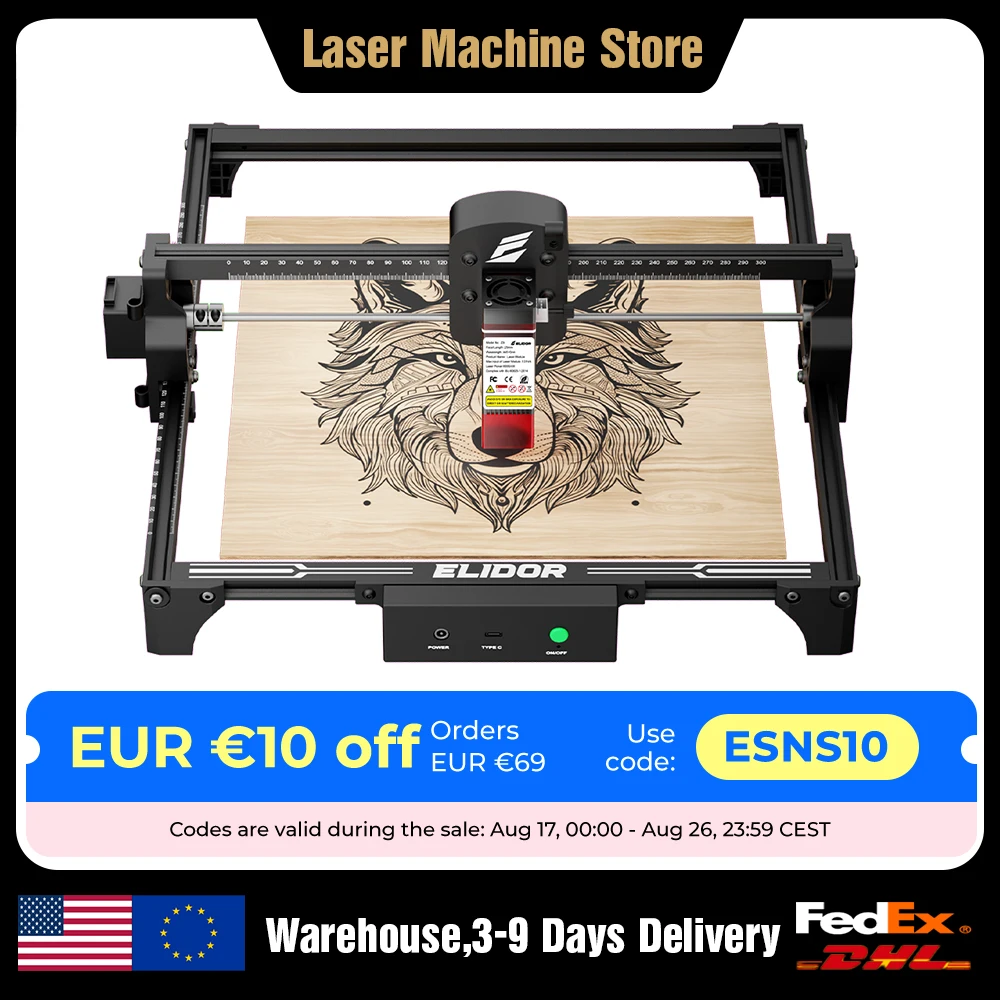
The ELIDOR Z6 features a 6W optical head mounted across a 300 mm × 300 mm workspace. This intermediate size fits comfortably on smaller workbenches while remaining large enough to handle typical craft plaques, trivets, and small joinery boxes.
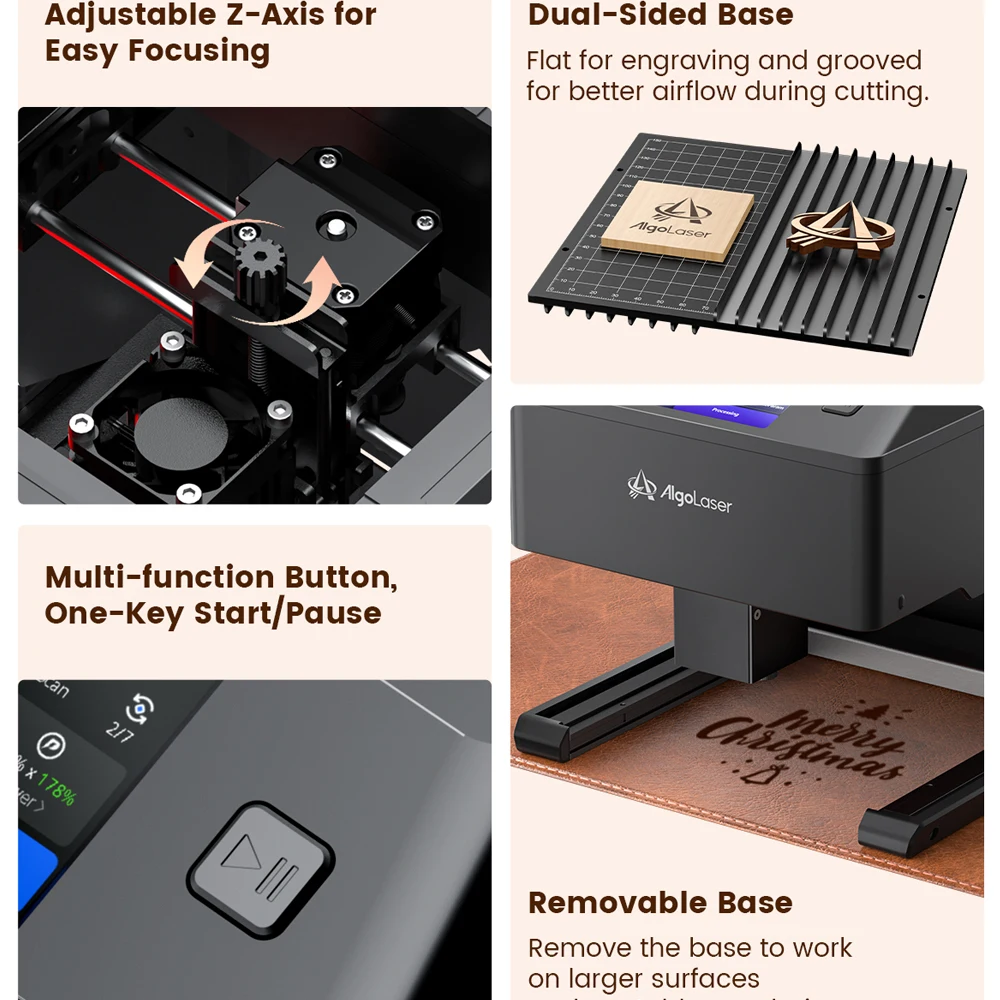
For workshops with limited bench area, the AlgoLaser Mini PIXI 5W offers a compact footprint suitable for desktop engraving and lightweight sheet cutting. It is designed for smaller custom items where storing a full 400 mm frame is impractical.

Another iteration of the AlgoLaser 5W platform features options for rotary roller attachments. When your woodworking projects expand from flat stock into turned items like rolling pins, wooden tap handles, or tumblers, a rotary accessory allows the Y-axis to rotate cylindrical objects beneath the focal plane.

The AlgoLaser PIXI enclosed system is advertised with power modules ranging from 3W to 10W and includes a 3.5-inch touchscreen. Unlike open-gantry cutters, an enclosed chassis helps contain stray light reflections and simplifies ducting exhaust fumes out a nearby workshop window.
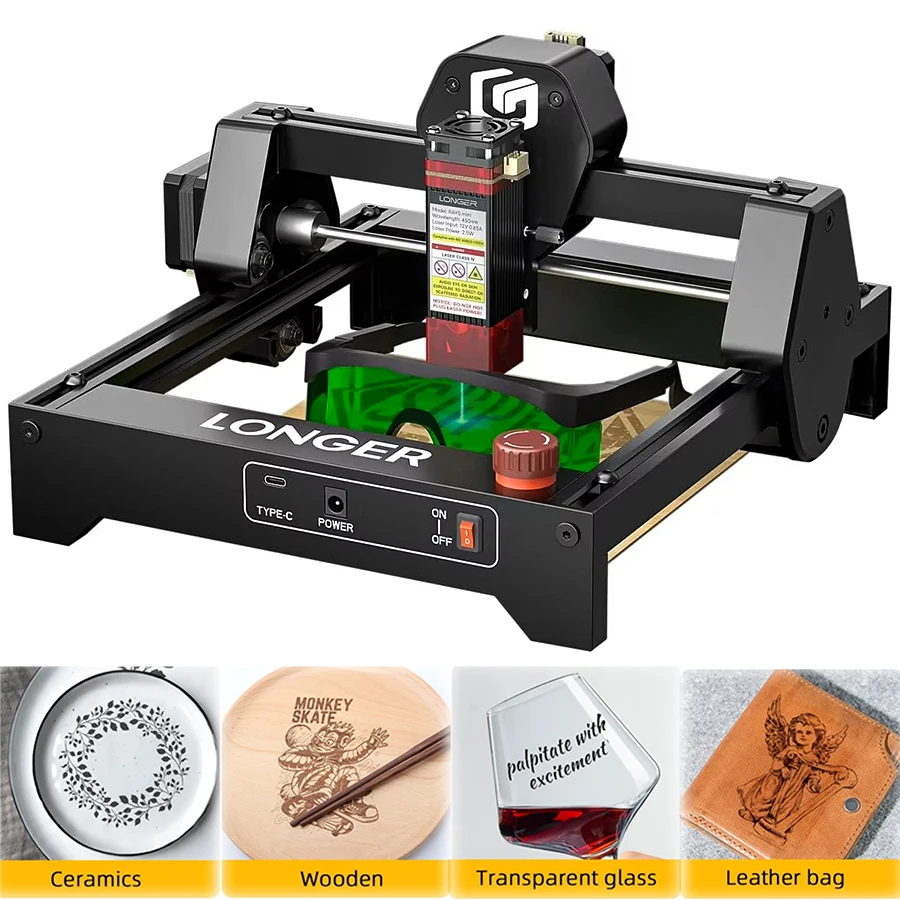
The LONGER Mini series provides low-to-mid wattage options (stated from 2.5W to 5.5W) in a pre-assembled, compact layout. It serves well as a dedicated marking and light-crafting tool that can be easily tucked into a cabinet when not in use.
Compact & Precision Etchers (Under 5W)
Ultra-compact cutters operate with optical outputs between 3W and 3.5W. While these machines lack the throughput for routine wood sheet cutting, they provide high positioning precision for detailed marking, burnishing logos into finished projects, and cutting very thin veneers.
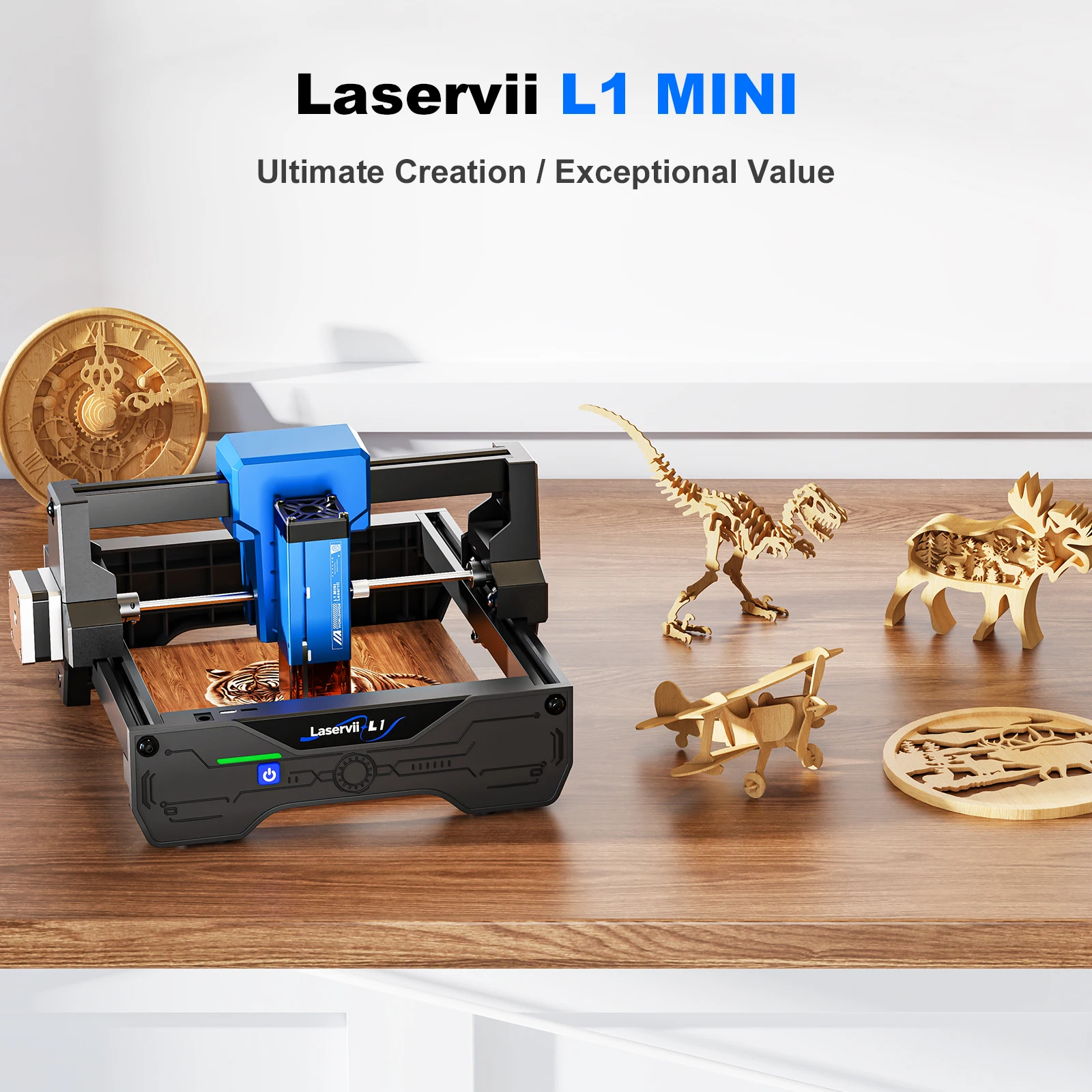
The Laservii L1 Mini pairs a stated 3W output with a 150 mm × 150 mm working area and a high advertised travel speed of up to 12,000 mm/min. Its 0.1 mm precision rating fits small gift marking, leather tags, and miniature wooden components.
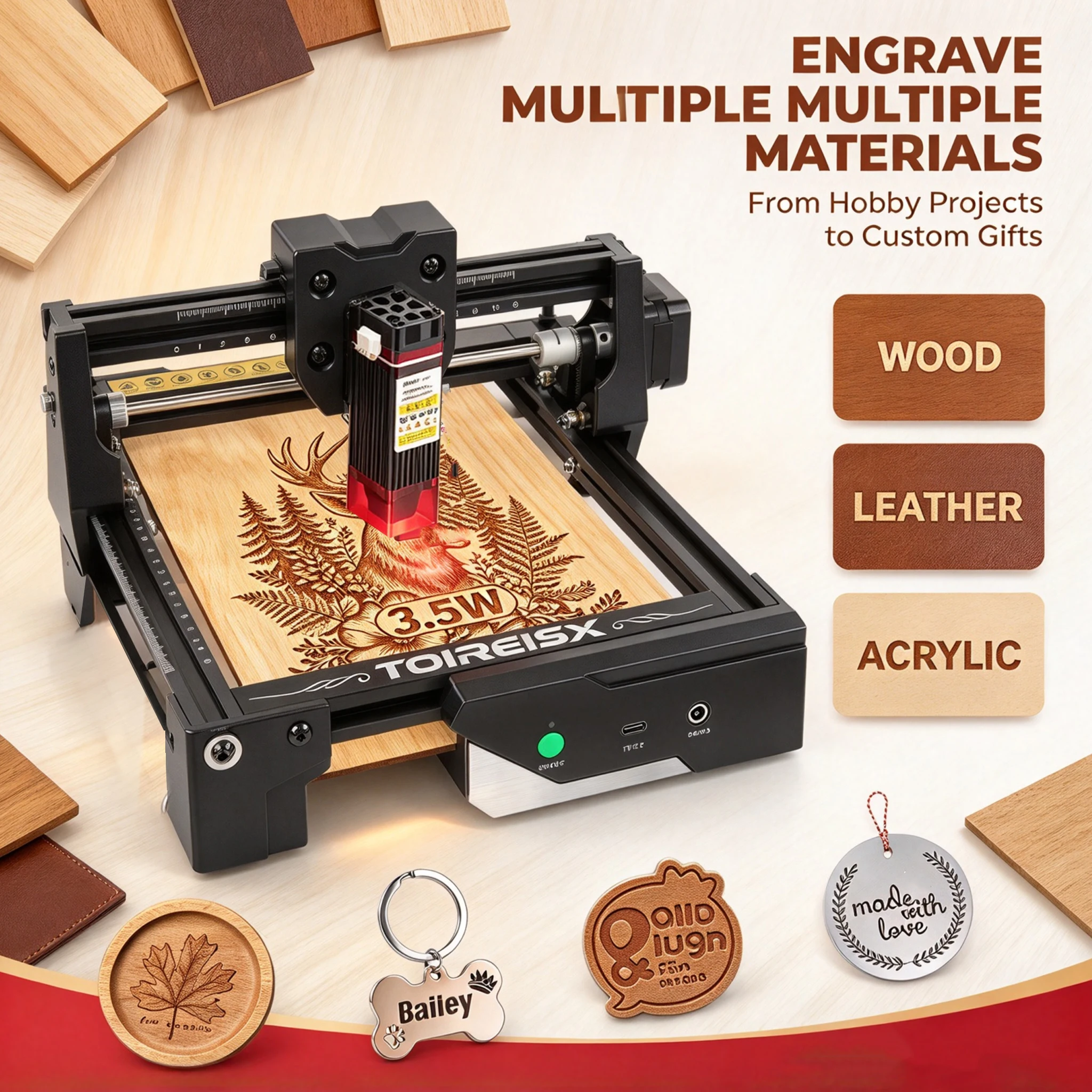
Similarly, the TOIREISX desktop engraver offers 3500 mW (3.5W) of optical power within a 150 mm × 150 mm field. For small wood-burning marks, signatures, or serial tags on completed furniture, a compact unit provides a low-barrier, portable solution.
Desktop Laser Machine Comparison
The table below highlights stated specifications across the models featured above. Note that variations in module wattage and included accessories depend on the exact SKU selected at checkout.
| Machine Model | Stated Optical Power | Stated Work Area | Form Factor / Features | Software Support |
|---|---|---|---|---|
| LONGER 10W (Slot 1) | 10W | 400 × 400 mm | Open Frame, WiFi, Touchscreen | LightBurn, LaserGRBL |
| Laservii L1 Mini (Slot 2) | 3W | 150 × 150 mm | Compact Desktop, 12,000 mm/min | Not stated in listing title |
| LONGER Multi-Power (Slot 3) | 5W / 10W / 20W (Variant) | 400 × 400 mm | Open Frame, WiFi, Touchscreen | LightBurn, LaserGRBL |
| LONGER 20W (Slot 4) | 20W | 400 × 365 mm | Open Frame, WiFi, Touchscreen | LightBurn, LaserGRBL |
| ATOMSTACK Swift (Slot 5) | 7W / 12W (Variant) | Not stated in listing title | Portable Desktop Frame | LightBurn Compatible |
| Atomstack A20 Pro V2 (Slot 6) | 20W (Quad-Laser) | 400 × 365 mm | Open Gantry, High Output | Not stated in listing title |
| ELIDOR Z6 (Slot 7) | 6W | 300 × 300 mm | Mid-Size Frame CNC Gantry | Not stated in listing title |
| AlgoLaser PIXI Mini (Slot 8) | 5W | Not stated in listing title | Portable Mini Diode Tool | Not stated in listing title |
| AlgoLaser PIXI Enclosed (Slot 9) | 3W / 5W / 10W (Variant) | Not stated in listing title | Fully Enclosed, 3.5″ Touchscreen | Not stated in listing title |
| AlgoLaser Mini Rotary (Slot 10) | 5W | Not stated in listing title | Compact, Rotary Roller Options | Not stated in listing title |
| LONGER Mini (Slot 11) | 2.5W / 3.5W / 5.5W (Variant) | Not stated in listing title | Pre-Assembled, Compact WiFi | LightBurn, LaserGRBL |
| Twotrees TTS-20 Max (Slot 12) | 20W | 600 × 600 mm | Large-Format Gantry | Not stated in listing title |
| TOIREISX 3.5W (Slot 13) | 3500 mW (3.5W) | 150 × 150 mm | Compact Portable, 0.01 mm Precision | Not stated in listing title |
Wood Preparation and Workshop Safety
Operating a wood laser requires distinct safety protocols compared to conventional bladed tools like table saws or routers. Instead of physical chips, you are dealing with concentrated laser radiation, combustion risk, and airborne particulates.
1. Eye Protection
Diode lasers operate in the visible blue light spectrum (typically around 445–455 nm). Diffuse reflections from timber surfaces or metal honeycomb beds can cause permanent retinal damage. Always wear laser safety glasses rated for your machine's exact wavelength and optical density (OD), verified by the markings on the frame. Do not rely on generic tinted sunglasses or unverified bundled goggles.
2. Fire Prevention
Laser cutting operates by intentional thermal decomposition. Dry wood, wood dust, and honeycomb debris can ignite if a cut stalls or if power levels are too high for the chosen feed rate. Never leave a running laser unattended. Keep a dedicated fire-extinguishing blanket or a Class A-rated fire extinguisher mounted within reach of your workstation.
3. Wood Selection and Resins
Natural solid timbers (like cherry, maple, walnut, and basswood) cut predictably and produce pleasant, organic aromas. However, composite boards, MDF, and interior-grade construction plywood contain synthetic binders and urea-formaldehyde resins that produce acrid, hazardous fumes when vaporized. When cutting composite boards, choose laser-compatible plywoods (frequently sold as interior basswood or birch with non-toxic glue lines) and ensure continuous, positive exhaust venting directly outdoors.
Frequently Asked Questions
Can a 10W diode laser cut 1/4-inch (6 mm) wood in a single pass?
Cutting 6 mm wood with a 10W diode laser is possible, but single-pass success depends heavily on the wood's density and moisture. Soft basswood or low-density craft plywood cuts far easier than exterior-grade birch with dense phenolic glue lines. With 10W, multiple slower passes combined with high-pressure air assist are typically required to achieve clean, uncharred results through 6 mm stock.
What is the practical difference between LightBurn and LaserGRBL?
LaserGRBL is a free, open-source Windows program that handles straightforward G-code sending, basic image tracing, and simple cuts. LightBurn is a paid, cross-platform (Windows, macOS, Linux) software suite with a full vector design canvas, kerf compensation, advanced layer sequencing, rotary setup tools, and camera alignment support. Most experienced makers consider LightBurn the industry benchmark for daily desktop production.
Do I need a honeycomb bed for cutting wood?
A honeycomb or slatted metal cutting bed is strongly recommended. When cutting through wood on a flat solid surface, the exiting laser beam reflects off the backplate, scorching the underside of your workpiece (often called flashback). A honeycomb grid elevates the sheet, allowing smoke and heat to dissipate downward while providing clearance for clean through-cuts.
How do I verify what accessories come with an open-frame laser?
Online marketplace listings frequently display fully accessorized setups (showing enclosures, honeycomb plates, air pumps, and rotary rollers) for illustrative purposes. Always review the exact seller variant dropdown and itemized packaging list. If essential cutting aids like an air assist pump or safety eyewear are not explicitly listed in the package contents, budget to source them separately.
Pricing, availability, and specific bundle inclusions reflect current marketplace listings and seller disclosures at the time of publication. Confirm all technical parameters, package contents, and destination shipping terms directly with the seller before ordering.
Evaluation is based on published specifications and seller listings. No physical or hands-on testing was conducted; unlisted specifications may still be available from the seller.

